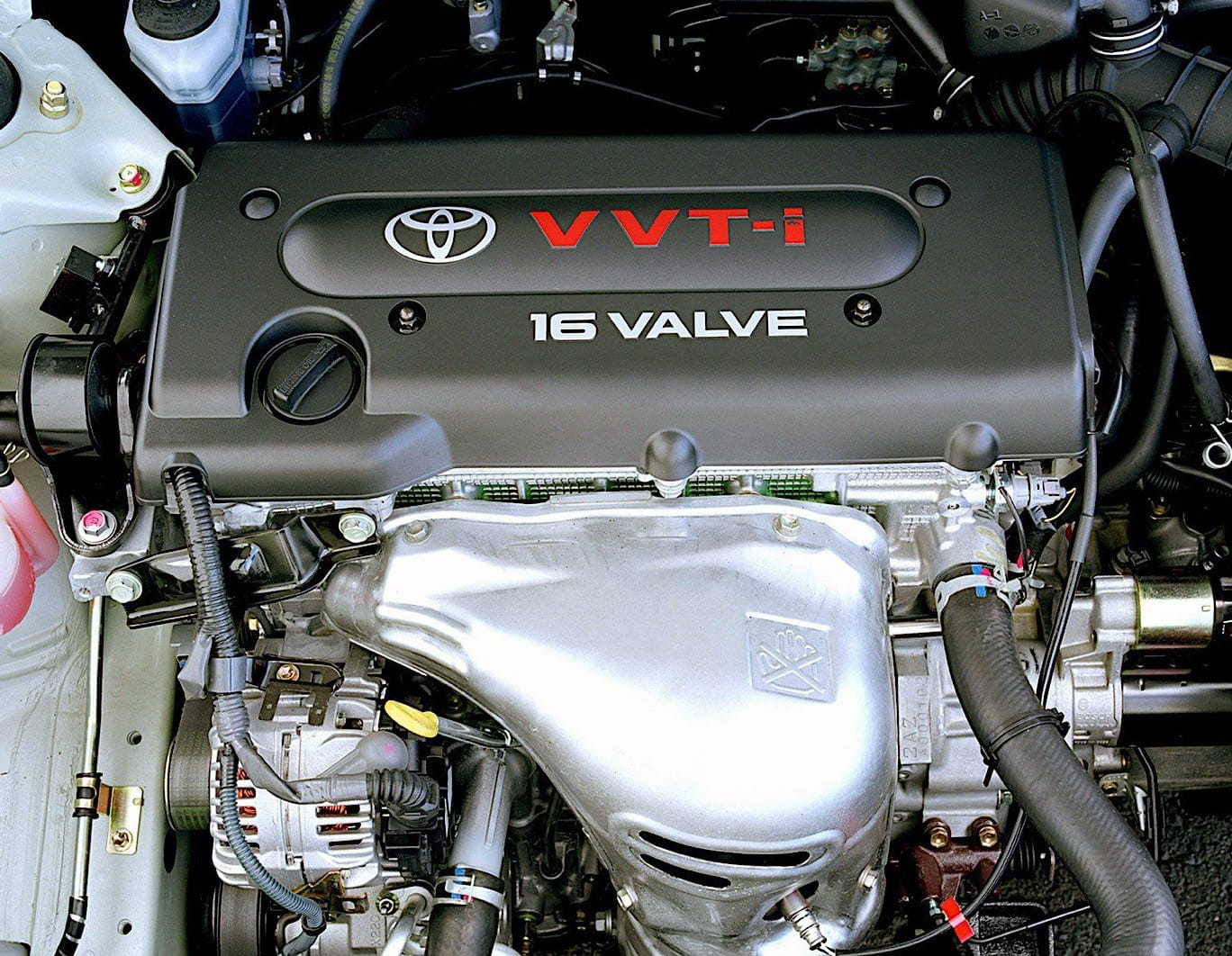
The Toyota 2AZ-FE 2.4-liter engine is widely known for its durability, but it also has a well-documented problem involving cylinder head bolt threads stripping from the aluminum engine block. This issue can eventually lead to a 2AZ-FE head gasket failure, coolant loss, overheating, and potentially serious engine damage.
The problem is commonly described as “2AZ-FE head bolts stripping,” although the head bolts themselves are usually not the part that fails. The problem is generally the aluminum threads inside the engine block, which can lose their ability to securely hold the cylinder head bolts.
Toyota addressed this issue in a technical service bulletin and provided a repair procedure using Time-Sert thread inserts (or any other aftermarket thread inserts).
If you own a Toyota equipped with the 2AZ-FE VVTI engine, understanding this problem can help you identify the warning signs before a relatively straightforward repair turns into a major engine failure.
What Is the 2AZ-FE Head Bolt Problem?
The 2AZ-FE uses an aluminum engine block with steel cylinder head bolts. The bolts provide the clamping force required to keep the cylinder head tightly sealed against the head gasket and engine block.
Over time, the threads in the aluminum block can become damaged or pull out. When this happens, the affected head bolt may no longer maintain the correct clamping force.
Once the cylinder head is no longer properly clamped, the head gasket can lose its ability to maintain a reliable seal.
This can create a chain reaction:
Stripped block threads → reduced head bolt clamping force → head gasket failure → coolant loss → overheating → possible engine damage.
This is why the 2AZ-FE stripped head bolt problem should not be ignored.
Why Does the 2AZ-FE Head Gasket Fail?
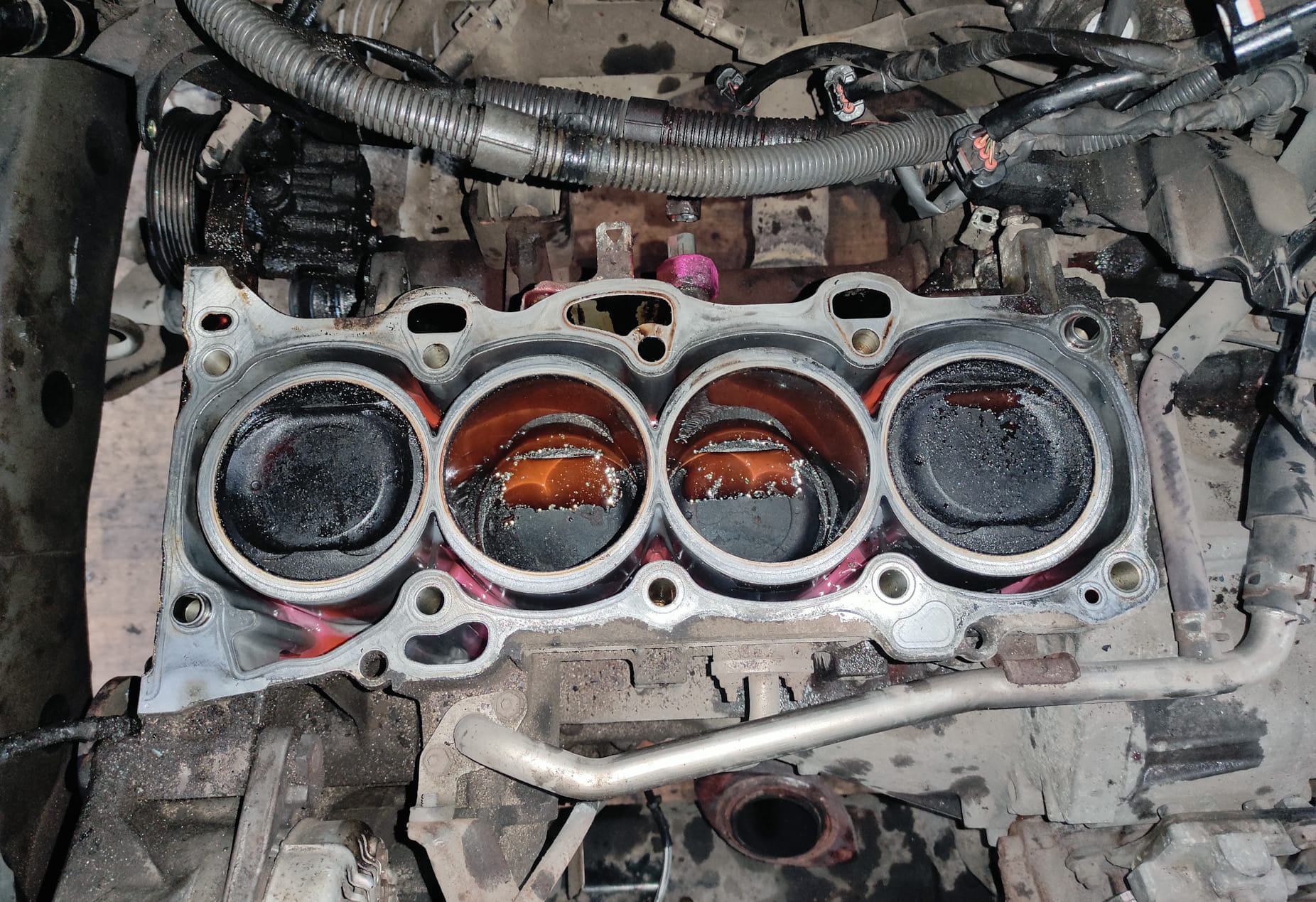
The head gasket is responsible for sealing several important areas between the engine block and cylinder head. It must contain combustion pressure while also preventing engine oil and coolant from mixing.
A head gasket does not work by itself. It depends on the cylinder head being clamped against the block with the correct amount of force.
If a head bolt loses its clamping force because the aluminum block threads have failed, the cylinder head can lose some of its sealing pressure.
The gasket may then begin to leak.
Depending on where the seal is compromised, the engine can experience:
- Coolant loss
- External coolant leaks
- Combustion gases entering the cooling system
- Engine overheating
- Rough running
- Misfires
- Low compression
- White exhaust smoke
- Coolant contamination with oil
- Repeated cooling-system pressure problems
A 2AZ-FE head gasket problem can therefore be the result of an underlying cylinder-head bolt thread problem rather than simply a defective gasket.
2AZ-FE Stripped Head Bolts: What Actually Strips?
This is an important distinction.
When mechanics or owners say that the 2AZ-FE head bolts have stripped, they are often referring to the threads in the engine block.
The head bolts themselves are made from steel, while the threaded holes in the engine block are aluminum.
The aluminum threads are therefore the component that can pull out or become damaged.
The bolt may look completely normal when removed.
The problem is inside the block.
This is also why simply installing a new head gasket and reinstalling the original bolts may not permanently solve the problem. If the block threads cannot hold the required clamping force, the new gasket can fail again.
Which Toyota Models Have the 2AZ-FE Problem?
The 2AZ-FE engine was used in numerous Toyota and Lexus applications around the world.
Toyota’s technical service information specifically identified cylinder-head bolt thread damage in several applications, including:
- Toyota Camry
- Toyota Highlander
- Toyota RAV4
- Toyota Solara
- Toyota Previa
- Toyota Estima
- Toyota Alphard
- Toyota Harrier
- Toyota Ipsum
- Scion tC
Certain model years are more closely associated with the documented issue, so it is important to identify the exact vehicle year, engine and market rather than assuming every 2AZ-FE engine has the same problem.
This is particularly important when purchasing a used Toyota with the 2AZ-FE 2.4L engine.
Common 2AZ-FE Head Gasket Symptoms
A failing head gasket can produce several warning signs. Some symptoms may appear gradually, while others can become serious very quickly.
1. Unexplained Coolant Loss
One of the most important warning signs is coolant disappearing without an obvious external leak.
If the cooling system repeatedly requires topping up, the engine should be inspected.
2. Engine Overheating
A compromised head gasket can allow coolant to escape or combustion gases to enter the cooling system.
Either situation can cause the engine to overheat.
Continuing to drive an overheating 2AZ-FE can result in additional damage to the cylinder head and engine block.
3. Rough Idle or Misfires
If coolant enters a combustion chamber, the affected cylinder may begin misfiring.
The check-engine light may illuminate and diagnostic trouble codes can be stored.
4. White Exhaust Smoke
A significant internal coolant leak can cause white exhaust vapor or smoke, particularly after the engine has warmed up.
However, white vapor alone does not automatically prove that the head gasket has failed. Proper testing is required.
5. Pressurized Cooling System
Combustion gases entering the cooling system can cause abnormal pressure and bubbling.
A cooling-system pressure test and combustion-gas test can help determine whether combustion pressure is entering the cooling system.
6. Repeated Head Gasket Failure
If a 2AZ-FE has already had a head gasket replaced and develops the same problem again, the condition of the block head-bolt threads should be carefully investigated.
Replacing the gasket without addressing damaged threads may not solve the underlying problem.
Why Is the Aluminum Block Vulnerable?
The 2AZ-FE uses an aluminum engine block, which provides advantages in terms of weight and thermal efficiency.
However, aluminum is softer than steel.
The cylinder head bolts are subjected to substantial clamping loads, while the aluminum threads must withstand those loads over many heating and cooling cycles.
Repeated thermal cycling can contribute to deterioration of the threaded areas.
Once a thread begins to lose its ability to hold the bolt correctly, the problem can become progressively worse.
This is particularly important during cylinder-head removal and installation because improper procedures, incorrect torque, damaged threads, or incorrect tightening methods can create additional problems.
How Do You Diagnose a 2AZ-FE Head Gasket Problem?
A proper diagnosis should determine whether the engine actually has a head-gasket failure and, if so, whether damaged block threads are involved.
Useful diagnostic procedures include:
Cooling-System Pressure Test
A pressure test can help identify external and internal coolant leaks.
Combustion-Gas Test
A chemical block test can help determine whether combustion gases are entering the cooling system.
Compression Test
A compression test can identify cylinders with unusually low compression.
Leak-Down Test
A cylinder leak-down test can provide additional information about where compression is escaping.
Inspection of Head Bolts and Block Threads
If the cylinder head is removed, the threaded holes should be carefully inspected.
A head bolt that does not tighten correctly or appears to pull out of the block is a major warning sign.
How Is the 2AZ-FE Stripped Thread Problem Repaired?
Fortunately, a damaged 2AZ-FE cylinder-head bolt thread does not necessarily mean the engine must be replaced.
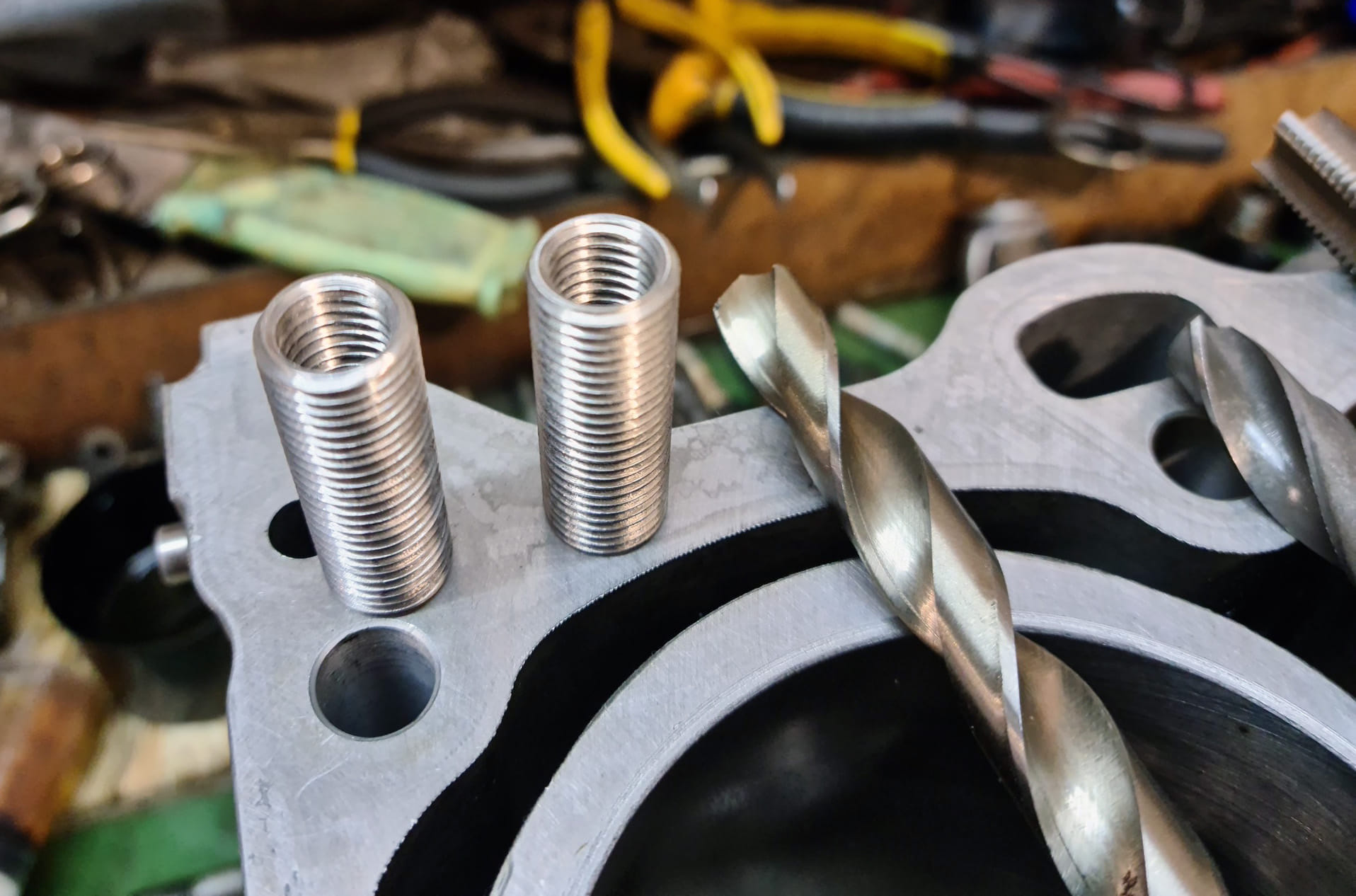
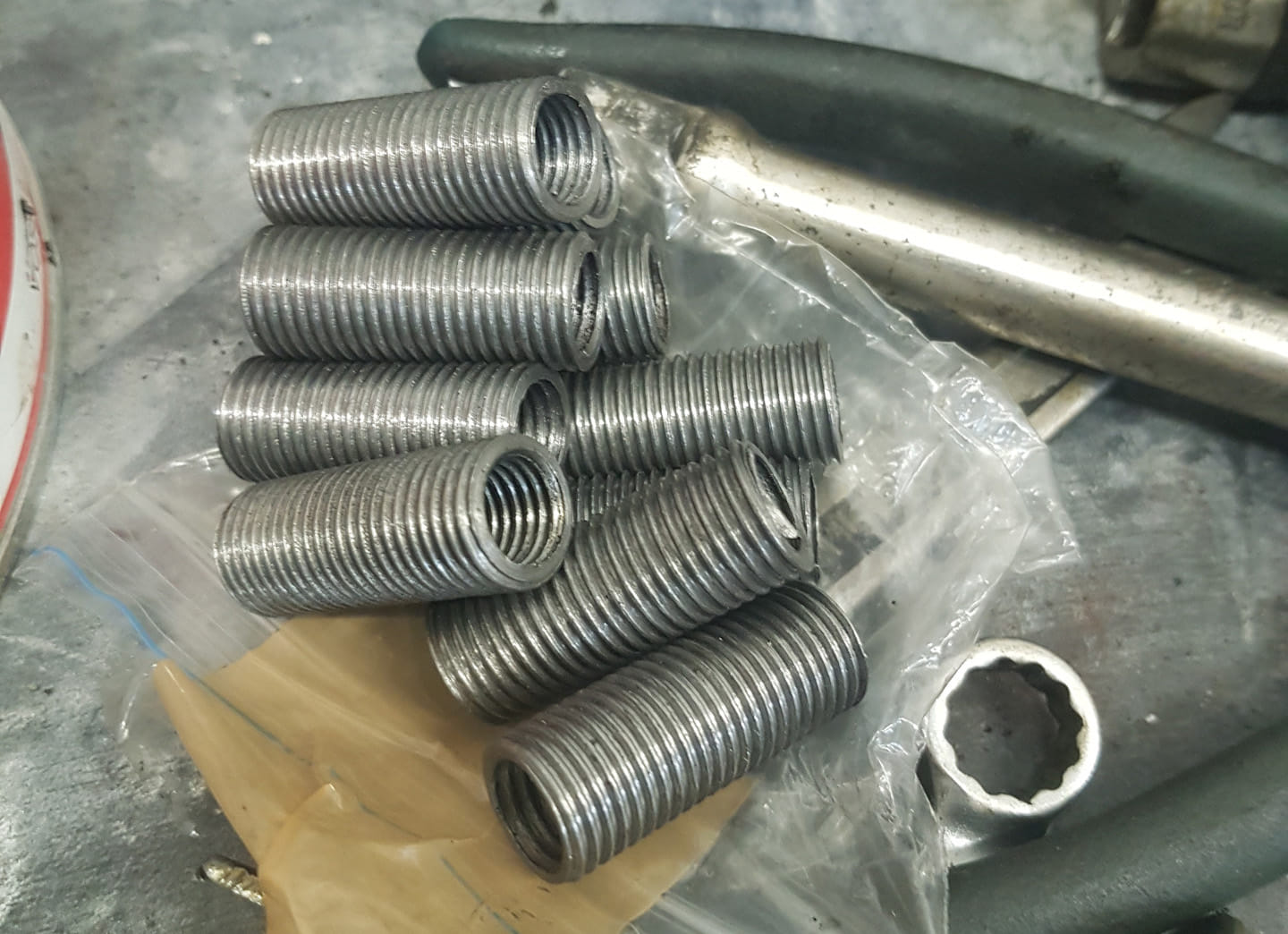
Toyota’s documented repair procedure uses thread inserts to restore the damaged threads in the aluminum engine block.
A properly installed insert provides a strong threaded surface for the cylinder-head bolt.
The general repair process involves:
- Removing the cylinder head.
- Identifying the damaged block threads.
- Preparing the affected threaded holes.
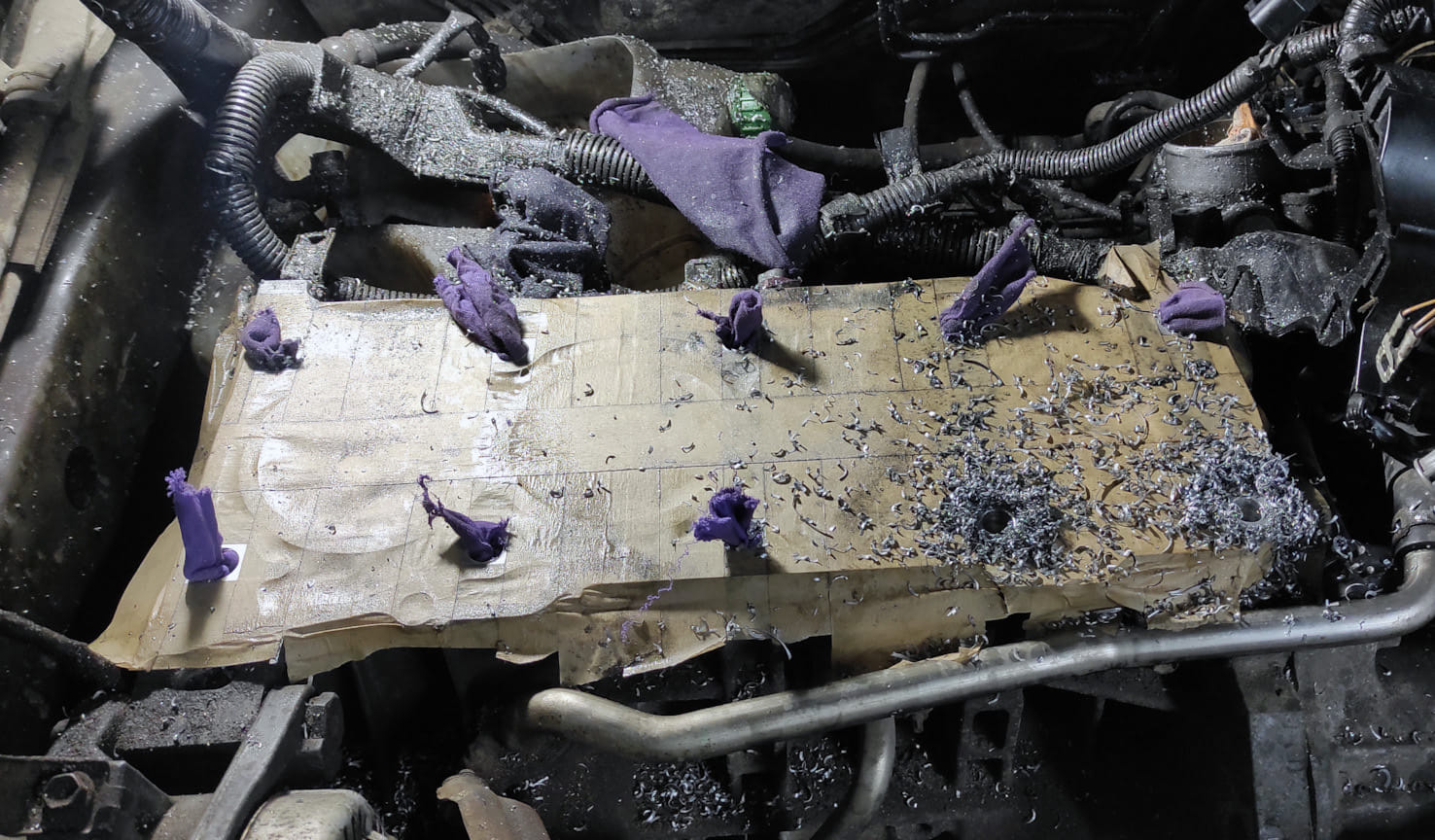
- Machining the holes using the appropriate tooling.
- Cutting the required thread for the insert.
- Installing the thread inserts.
- Thoroughly cleaning the engine block.
- Inspecting the cylinder head and block surfaces.
- Installing the appropriate head gasket.
- Reassembling the cylinder head using the correct tightening procedure.
This is precision engine work. The block must be accurately machined and cleaned, and the insert must be installed correctly.
Thread Repair Kits for the 2AZ-FE
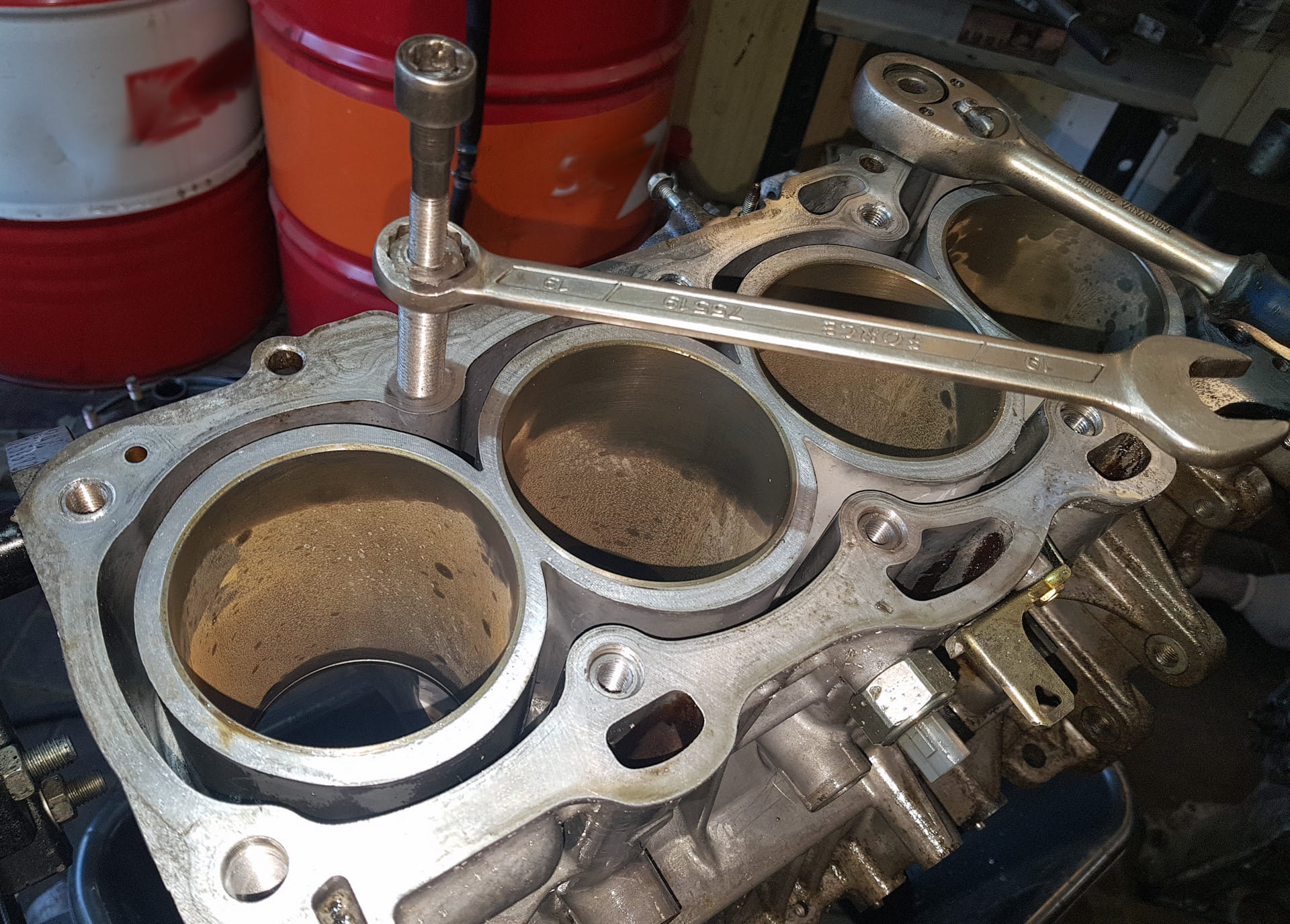
One of the best-known solutions for the 2AZ-FE head bolt thread repair is the Time-Sert system.
Toyota’s technical service information specifies a Time-Sert M11 × 1.5 repair solution for affected cylinder-head bolt threads.
A properly installed steel insert restores the threaded hole and allows the cylinder-head bolt to achieve the required clamping force.
The important point is that the repair must be performed correctly.
Simply forcing a new bolt into damaged aluminum threads is not a reliable repair.
Do You Need a New Engine After a 2AZ-FE Head Bolt Failure?
Not necessarily.
A stripped 2AZ-FE head bolt thread can often be repaired without replacing the entire engine.
However, the overall condition of the engine needs to be evaluated.
If the engine has experienced severe overheating, the cylinder head may be warped or damaged. The block surface and other engine components should also be inspected.
If the cylinder head and block remain within acceptable specifications, repairing the damaged threads and replacing the head gasket can be a practical solution.
If the engine has suffered extensive overheating or internal damage, an engine replacement or complete rebuild may make more financial sense.
Why Correct Head Bolt Torque Matters
Correct cylinder-head bolt installation is extremely important on the 2AZ-FE.
The bolts must be tightened using the correct sequence and procedure for the specific engine and vehicle.
Incorrect torque can cause problems in either direction.
Too little clamping force can allow the head gasket to leak.
Too much or incorrect tightening can damage the threads or fasteners and can create an incorrect clamping load.
The condition of the block threads is equally important.
Even a perfectly installed new head gasket cannot compensate for a cylinder-head bolt that cannot maintain the required clamping force.
Can the 2AZ-FE Head Gasket Problem Be Prevented?
There is no simple maintenance procedure that guarantees a 2AZ-FE will never experience this problem.
However, good maintenance can reduce the chance of secondary damage.
Keep the cooling system in good condition and address overheating immediately.
Important preventative steps include:
- Maintain the correct coolant level.
- Repair coolant leaks promptly.
- Keep the radiator and cooling system in good condition.
- Monitor engine temperature.
- Never continue driving an overheating engine.
- Use the correct head-gasket installation procedure.
- Follow the correct cylinder-head bolt torque procedure.
- Inspect block threads whenever the cylinder head is removed.
- Use the correct replacement parts.
The most important point is to never ignore an overheating problem.
An overheating event can turn a manageable head-gasket or thread issue into a much more expensive engine repair.
Is the 2AZ-FE a Bad Engine?
Despite the well-known head-bolt thread issue, it would be unfair to describe every 2AZ-FE as a bad engine.
The 2AZ-FE was produced in large numbers and used in many Toyota vehicles.
It offers a combination of good fuel economy, relatively simple design and useful torque from its 2.4-liter displacement.
Like many engines, it has known weaknesses that owners and technicians should understand.
The cylinder-head bolt thread problem is one of the most important issues to know about when working on certain 2AZ-FE applications.
2AZ-FE Head Gasket Problem: Final Thoughts
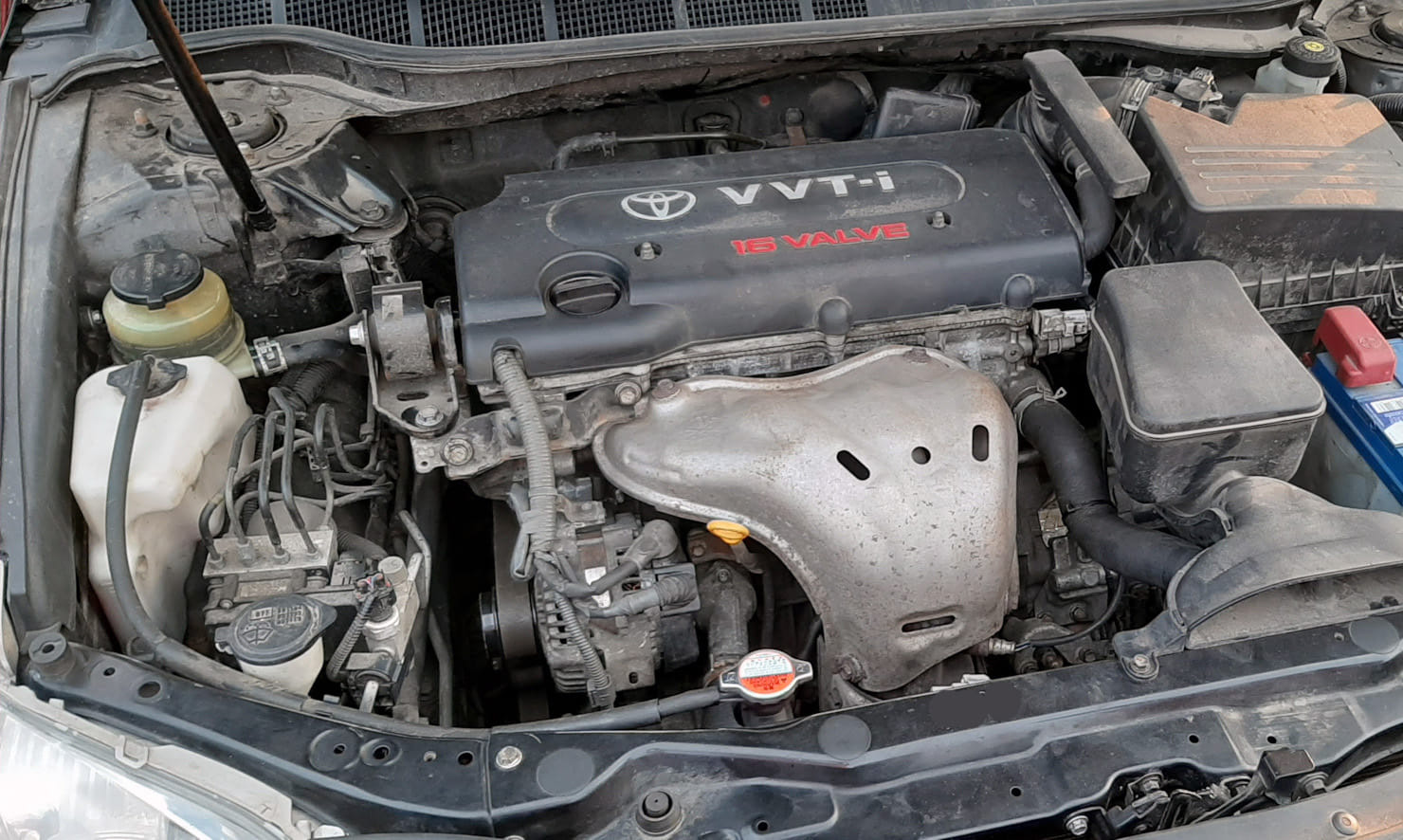
The Toyota 2AZ-FE head gasket problem is closely connected to the engine’s known cylinder-head bolt thread issue.
In many cases, the head gasket itself is not the original cause of the failure. Instead, damaged aluminum threads in the engine block can prevent the cylinder-head bolts from maintaining the necessary clamping force.
Once the clamping force is compromised, the head gasket can begin to leak, resulting in coolant loss, overheating, misfires and potentially serious engine damage.
The good news is that a 2AZ-FE stripped head bolt thread can often be repaired using a properly installed thread insert rather than replacing the entire engine.
For owners of Toyota Camry, Highlander, RAV4, Solara or any other models equipped with the 2AZ-FE, knowing the symptoms and understanding the underlying problem can save significant time and money.
If your 2AZ-FE is showing signs of coolant loss, overheating or repeated head-gasket failure, the cylinder-head bolt threads should be part of the diagnosis, especially if the cylinder head has previously been removed.
Frequently Asked Questions About the 2AZ-FE
Does the 2AZ-FE have a head gasket problem?
- Certain 2AZ-FE applications are known for cylinder-head bolt thread problems that can contribute to head-gasket failure. The aluminum block threads can become damaged and lose their ability to maintain the required cylinder-head clamping force.
Do 2AZ-FE head bolts strip?
- The problem is usually the threads in the aluminum engine block, rather than the steel head bolts themselves. This is commonly referred to as the 2AZ-FE stripped head bolt problem.
Can a stripped 2AZ-FE head bolt thread be repaired?
- Yes. Damaged block threads can be repaired using an appropriate thread insert system. Toyota’s documented repair procedure uses Time-Sert inserts.
Can you replace the 2AZ-FE head gasket without repairing the threads?
- If the block threads are damaged, replacing only the head gasket may not solve the underlying problem. The head bolts must be capable of maintaining the correct clamping force.
How do I know if my 2AZ-FE has a blown head gasket?
- Common symptoms include unexplained coolant loss, overheating, misfires, rough running, white exhaust vapor and abnormal cooling-system pressure. Proper diagnostic testing is necessary to confirm a head-gasket failure.
Is the 2AZ-FE worth repairing?
- In many cases, yes. If the engine has good compression and the major components are in good condition, repairing the damaged block threads and installing a new head gasket can be considerably more economical than replacing the complete engine.


