Subaru vehicles are known for their all-wheel-drive systems, boxer engines, and practical engineering. However, like any modern vehicle, a Subaru can develop engine, emissions, fuel system, and sensor problems that trigger the Check Engine light.
When this happens, an OBD2 scanner can retrieve diagnostic trouble codes (DTCs) stored in the engine control unit (ECU). These codes help narrow down the possible cause of a problem, making it easier to diagnose a Subaru Impreza, Forester, Outback, Legacy, WRX, or another model.
In this guide, we cover the most common Subaru OBD2 error codes, what they mean, their typical causes, and which components may need inspection or replacement.
What Are Subaru OBD2 Error Codes?
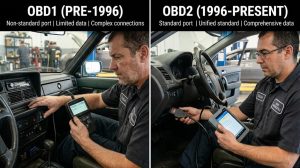
OBD2 stands for On-Board Diagnostics II. It is a standardized vehicle diagnostic system used to monitor engine operation and emissions-related components.
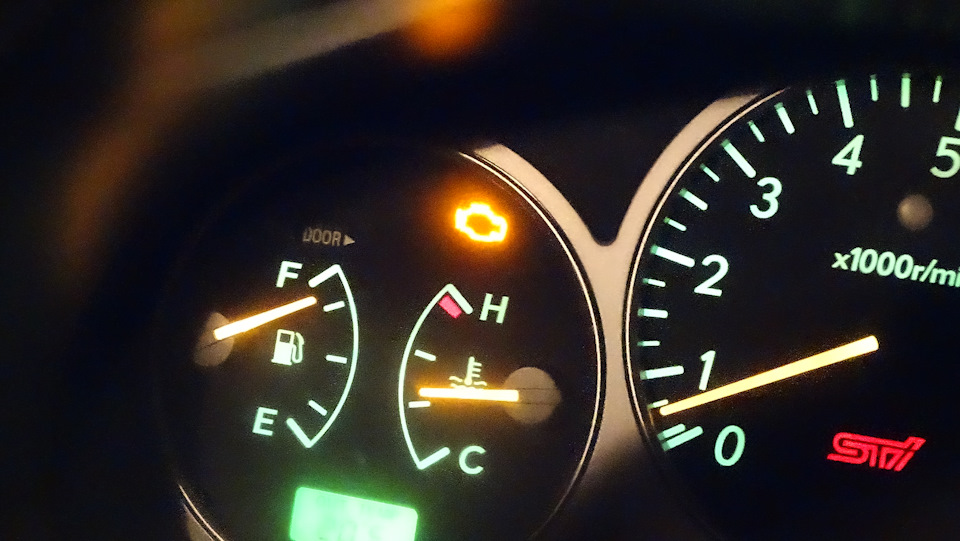
When the ECU detects a problem, it may store a diagnostic trouble code and illuminate the Check Engine light. A compatible OBD2 scanner can read these codes through the vehicle’s diagnostic connector.
Most generic OBD2 codes begin with the letter P, which identifies powertrain-related faults. Some codes are generic, while others are manufacturer-specific or depend on the engine and model year.
Most Common Subaru OBD2 Codes
The following table lists frequently encountered Subaru diagnostic codes. The exact causes and diagnostic procedures vary by model, engine, and year.
| OBD2 code | Meaning |
|---|---|
| P0420 | Catalyst system efficiency below threshold |
| P0171 | System too lean, Bank 1 |
| P0300 | Random or multiple cylinder misfires |
| P0301–P0304 | Misfire detected in a specific cylinder |
| P0455 | EVAP system large leak detected |
| P0456 | EVAP system very small leak detected |
| P0457 | EVAP leak detected, often associated with a loose fuel cap |
| P0031 | Heated oxygen sensor heater circuit low, Bank 1 Sensor 1 |
| P0130 | Oxygen sensor circuit malfunction, Bank 1 Sensor 1 |
| P0026 | Intake valve control solenoid circuit range/performance, Bank 1 |
| P0028 | Intake valve control solenoid circuit range/performance, Bank 2 |
Subaru service information specifically identifies P0420 as a catalyst-efficiency fault and recommends checking for other engine, fuel-trim, and oxygen-sensor codes before replacing components. This is an important step because several faults can occur together.
1. Subaru P0420 – Catalyst System Efficiency Below Threshold
P0420 is one of the best-known Subaru OBD2 codes. It indicates that the engine computer has detected catalyst efficiency below the expected threshold on Bank 1.
Possible symptoms:
- Check Engine light illuminated
- Failed emissions test
- Reduced fuel economy in some cases
- Exhaust smell or unusual exhaust behavior
Common causes:
- Worn or damaged catalytic converter
- Faulty oxygen or air-fuel ratio sensor
- Engine misfires
- Incorrect fuel mixture
- Exhaust leaks affecting sensor readings
How to diagnose it:
Check for additional codes before replacing the catalytic converter. Misfires, lean or rich fuel mixtures, and oxygen-sensor faults can contribute to a P0420 diagnosis. Inspect the exhaust system and evaluate sensor readings using suitable diagnostic equipment.
Replacing the catalytic converter without identifying the underlying cause can result in the code returning.
2. Subaru P0171 – System Too Lean, Bank 1
P0171 means the engine control unit has detected a lean fuel mixture on Bank 1. In simple terms, the measured air-fuel mixture is leaner than the ECU expects.
This code can occur on Subaru boxer engines when unmetered air enters the intake system or the engine’s fuel delivery and measurement systems are not operating correctly.
Possible symptoms:
- Rough idle
- Hesitation during acceleration
- Reduced engine performance
- Increased fuel consumption in some cases
- Check Engine light
Common causes:
- Vacuum leaks
- Cracked or disconnected intake hoses
- Dirty or faulty mass airflow sensor
- Low fuel pressure
- Fuel injector problems
- Exhaust leaks near an air-fuel ratio sensor
How to diagnose it:
Inspect the intake and vacuum hoses, check for air leaks, and examine fuel-trim data. A smoke test can help locate leaks that are difficult to see. The mass airflow sensor and fuel pressure should also be tested before replacing parts.
3. Subaru P0300 – Random or Multiple Cylinder Misfires
P0300 indicates that the ECU has detected misfires affecting multiple cylinders or occurring in a random pattern.
A misfire means that combustion in one or more cylinders is not occurring as expected. The problem may be related to ignition, fuel delivery, air intake, or mechanical engine condition.
Possible symptoms:
- Engine shaking or rough idle
- Hesitation during acceleration
- Loss of power
- Increased fuel consumption
- Flashing Check Engine light
Common causes:
- Worn spark plugs
- Faulty ignition coils or ignition components
- Fuel injector problems
- Vacuum or intake leaks
- Low compression
- Fuel delivery problems
How to diagnose it:
Check for cylinder-specific codes such as P0301, P0302, P0303, or P0304. Inspect the ignition system, evaluate fuel delivery, and perform compression or leak-down testing if necessary.
A flashing Check Engine light can indicate a severe misfire that may damage the catalytic converter. Stop driving when it is safe to do so and arrange an appropriate diagnosis.
4. Subaru P0301, P0302, P0303, and P0304 – Cylinder Misfire Codes
These codes identify a misfire detected in a particular cylinder:
- P0301: Cylinder 1 misfire
- P0302: Cylinder 2 misfire
- P0303: Cylinder 3 misfire
- P0304: Cylinder 4 misfire
These codes are relevant to four-cylinder Subaru engines, including many Impreza, Forester, Legacy, and Outback models. Six-cylinder engines can generate additional cylinder-specific codes.
Common causes:
- Faulty or worn spark plugs
- Ignition coil or ignition wiring problems
- Clogged or malfunctioning fuel injector
- Intake leaks
- Mechanical problems affecting cylinder compression
How to diagnose it:
Begin with the cylinder identified by the code. Inspect its spark plug and ignition components, then test the injector and compression if necessary. Do not assume the spark plug is responsible simply because a cylinder misfire code appears.
Correct cylinder identification and the engine-specific service manual are important when working on Subaru boxer engines.
5. Subaru P0455 – EVAP System Large Leak Detected
P0455 indicates that the evaporative emissions control system has detected a large leak or a condition consistent with one.
The EVAP system prevents fuel vapors from escaping into the atmosphere. It includes components such as the fuel cap, vapor hoses, charcoal canister, purge valve, and vent valve.
Possible causes:
- Loose or incorrectly fitted fuel cap
- Damaged fuel cap seal
- Cracked or disconnected EVAP hoses
- Faulty purge or vent valve
- Damaged charcoal canister or related components
How to diagnose it:
Check that the fuel cap is fitted correctly and inspect accessible vapor hoses and connections. If the code returns, an EVAP smoke test may help identify the leak.
Not every P0455 code is caused by the fuel cap, so further testing may be required.
6. Subaru P0456 – EVAP System Very Small Leak
P0456 indicates a very small leak detected in the evaporative emissions system.
Because the leak can be tiny, it may not cause any noticeable change in how the vehicle drives. The Check Engine light may be the only obvious symptom.
Possible causes:
- Fuel cap seal deterioration
- Small cracks in EVAP hoses
- Minor leaks at hose connections
- Faulty EVAP valves
- Leaks in the charcoal canister or related plumbing
How to diagnose it:
Inspect the fuel cap and accessible hoses first. If the problem persists, use a suitable EVAP diagnostic procedure, including a smoke test when appropriate.
Avoid replacing expensive EVAP components without confirming the source of the leak.
7. Subaru P0457 – EVAP Leak or Fuel Cap Problem
P0457 is associated with an evaporative emissions leak, often related to a loose or missing fuel cap.
The exact detection strategy depends on the Subaru model and year.
Possible causes:
- Loose fuel cap
- Missing fuel cap
- Damaged cap seal
- Leaking vapor hoses
- EVAP system component failure
How to diagnose it:
Make sure the correct fuel cap is installed and tightened according to the manufacturer’s instructions. Inspect the cap seal and EVAP plumbing if the warning returns.
If the code remains after the cap has been checked, further diagnosis is necessary.
8. Subaru P0031 – Oxygen Sensor Heater Circuit Low
P0031 indicates a low signal in the heater control circuit for the upstream heated oxygen sensor or air-fuel ratio sensor, Bank 1 Sensor 1, as applicable to the vehicle.
The sensor heater helps the sensor reach its operating temperature more quickly.
Possible causes:
- Faulty sensor heater
- Damaged wiring or electrical connector
- Blown fuse or power supply problem
- Faulty heater control circuit
Possible symptoms:
- Check Engine light
- Increased emissions during warm-up
- Poorer fuel economy in some circumstances
How to diagnose it:
Inspect the sensor wiring and connector for corrosion, damage, or heat exposure. Check the relevant power supply and heater circuit using the correct wiring diagram and diagnostic procedure.
The code does not automatically mean that the complete oxygen sensor must be replaced.
9. Subaru P0130 – Oxygen Sensor Circuit Malfunction
P0130 indicates a malfunction in the oxygen sensor circuit for Bank 1 Sensor 1.
The upstream sensor helps the ECU monitor the air-fuel mixture and adjust engine operation. Depending on the Subaru model, this position may use an air-fuel ratio sensor rather than a conventional narrowband oxygen sensor.
Common causes:
- Faulty sensor
- Damaged wiring or connector
- Exhaust leaks
- Electrical circuit problems
- Incorrect air-fuel mixture caused by another engine fault
How to diagnose it:
Inspect the wiring and connector, check for exhaust leaks, and evaluate live sensor data. Look for related fuel-trim or sensor-heater codes that may help identify the original fault.
10. Subaru P0026 and P0028 – Intake Valve Control System Faults
P0026 and P0028 are associated with intake valve control solenoid circuit range or performance problems on the respective engine bank in applications that use this system.
These codes are particularly relevant to certain Subaru engines equipped with variable valve lift or related intake valve control technology.
Possible causes:
- Faulty intake valve control solenoid
- Wiring or connector problems
- Oil level or oil condition issues, depending on the system
- Mechanical problems in the valve control mechanism
Possible symptoms:
- Check Engine light
- Reduced engine performance
- Rough running
- Changes in engine response
How to diagnose it:
Check the engine oil level and condition, inspect the electrical connectors, and follow the diagnostic procedure for the specific engine. Do not assume that every Subaru uses the same valve control system; applicability varies by engine and model year.
How to Read Subaru OBD2 Codes
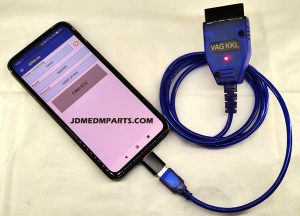
You can retrieve many generic powertrain codes with a compatible Subaru OBD2 scanner.
Follow these basic steps:
- Locate the OBD2 diagnostic connector, usually beneath the dashboard.
- Connect a compatible scanner with the ignition off or as instructed by the scanner manufacturer.
- Switch on the ignition and follow the device’s instructions.
- Read stored and pending diagnostic trouble codes.
- Record the codes and any available freeze-frame data.
- Diagnose the cause before clearing the codes or replacing parts.
A basic OBD2 reader can be useful for generic engine codes. However, some Subaru-specific systems and manufacturer-specific faults may require more advanced diagnostic equipment.
For a more complete diagnosis, a Subaru-capable scan tool may provide additional live data and access to systems beyond generic OBD2.
Can You Clear Subaru OBD2 Error Codes?
Most compatible scanners allow you to clear stored diagnostic trouble codes. However, clearing a code does not repair the underlying fault.
If the problem remains, the ECU may detect it again and illuminate the Check Engine light. Clearing codes can also erase useful diagnostic information and reset emissions readiness monitors.
It is generally better to record the codes and freeze-frame information before clearing anything. After a repair, follow the appropriate verification procedure to confirm that the fault has been resolved.
Final Thoughts
Subaru OBD2 error codes provide useful clues when diagnosing engine and emissions problems. Codes such as P0420, P0171, P0300, P0455, and P0456 can help identify which systems need attention, but they do not always identify a single failed component.
The most reliable approach is to scan the vehicle, record all related codes, inspect the affected system, and confirm the cause before buying replacement parts.
Because Subaru engines and diagnostic systems vary by model and year, always consult the correct service information before carrying out repairs. Subaru’s official owner information portal is a useful starting point for vehicle-specific documentation.
Understanding Subaru OBD2 codes can help owners and technicians make better repair decisions, avoid unnecessary parts replacement, and keep their vehicles running reliably.
Frequently Asked Questions
What is the most common Subaru OBD2 error code?
P0420 is a commonly encountered Subaru diagnostic code. It indicates that catalyst efficiency is below the expected threshold, but the underlying cause must be confirmed through proper diagnosis.
Can a Subaru OBD2 code tell me which part to replace?
Not always. A code identifies a detected fault or abnormal condition. For example, P0171 may result from an intake leak, a sensor problem, or insufficient fuel delivery rather than one specific failed part.
Can I use a universal OBD2 scanner on a Subaru?
Yes. A compatible universal OBD2 scanner can read many generic engine and emissions codes. Subaru-specific functions or codes from other control modules may require a more advanced scan tool.
Why does my Subaru Check Engine light return after clearing the code?
The light may return because the original fault remains or because the vehicle detects the same problem during a later drive cycle. Read the codes again and diagnose the underlying cause instead of repeatedly clearing the warning.
Should I keep driving with the Subaru Check Engine light on?
If the light is steady and the vehicle operates normally, arrange a diagnosis promptly and consult the owner’s manual. If the light flashes, the engine runs roughly, or there is a significant loss of power, stop driving when safe and seek professional assistance.